
villagers
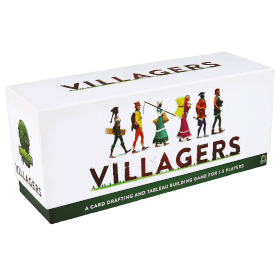 You are the founder of a new village during the middle ages, in the years after a great plague. The loss of so many people has created big problems for the survivors. Many of the people the villagers used to depend on for essential things like food, shelter and clothes are gone. Craftsmen find themselves without suppliers of raw materials, traders have lost their customers and many have lost their farms and workshops as they escaped the plague.
The roads are full of refugees seeking a new beginning. They come to you, hoping to settle down on your land and make a living. Your grain farm is the ideal starting point for a village, reliably providing food for many people. You must choose wisely who you allow to settle with you, as your food and resources are limited.
The people on the road have valuable and unique skills, but they all in turn rely on other people with very specific crafts to be able to work. Raw materials, tools and services must be provided by other people from the road.
إذا تمكنت من العثور على أشخاص يمكنهم العمل معًا لتحقيق ربح ، مع زيادة فائض الطعام لديك وقدرتك على بناء منازل جديدة ، فستكون قريتك مزدهرة.
The game comes with a solo mode where a lone village strives to prosper in spite of the dreaded Countess and her evil machinations.
عدد اللاعبين: 2 - 5
مدة اللعبة: 18 mn
تعقيد: 2 / 5
العب villagers و 1408 ألعاب أخرى online.
لا يلزم التنزيل - العب مباشرة من متصفح الويب الخاص بك.
مع أصدقائك وآلاف اللاعبين من أنحاء العالم.
مجاني.


العب villagers و 1408 ألعاب أخرى online.
لا يلزم التنزيل - العب مباشرة من متصفح الويب الخاص بك.
مع أصدقائك وآلاف اللاعبين من أنحاء العالم.
مجاني.
ملخص القواعد
The Groundwork: You are the founder of a small settlement, and you have dreams of one day turning your settlement into a booming and bustling Village! To do this, however, you must compete with other founders to attract the best inhabitants to your village, so that it can be the most prosperous of all...
The Game: Games are composed of a variable number of rounds where players first take turns drafting cards into their hands, and then go around the table playing cards into their tableaus. Cards have different symbols on them representing how many cards a player can draft, how many cards they can play, or how much money they generate during special income phases.
There are only two income phases in the entire game, one approximately at the middle of the game's duration, and one at the very end. These two income phases are where the majority of players' money will be generated.
The Goal: To have the most money at the end (just like in real life).
Overview
(This section contains a TL;DR version of the exhaustive rules listed below)
Games are composed of a variable number of rounds focused on expanding tableaus, interspersed by two special income-generating phases.
ROUNDS
Each round consists of two basic phases:
Draft phase
Starting with the current 1st Player, and going around the table clockwise, players take turns picking one of the following:
• A single face-up card ("Villager") from the 6 face-up cards (the "Road")
If there are coins placed on the face-up card that a player selects, they take those coins immediately into their "Supply"
• Blind-drawing a single face-down card from the top of any of the 6 "Road Stacks"
Drafting continues in this one-at-a-time fashion until each player has reached their Draft limit
Draft limit
The number of cards that a player must draft each round (their "Draft limit") is determined by adding 2 to the number of red "Food" symbols showing on cards in their tableau:
• Thus, each player starts with the minimum of 2 cards drafted per round, since no one starts the game with a "Food" symbol in their tableau
• The maximum Draft limit is 5 cards drafted per round (or, 3 "Food" symbols showing in a player's tableau)
Players may have unlimited "Food" symbols in their tableau, but only 3 of these may be counted toward the player's Draft limit
End of the Draft phase
Certain cards may be removed from the Road and replaced with new ones, to provide some variety in cards available:
• In 2 player games: in reverse-player-order, each player may (but is not required to) place a coin from the Bank onto a Road card to exempt it from being recycled; once both players have had a chance to place a coin, all cards in the Road without coins on them are recycled
• In 3+ player games: No player action is required; all cards in the Road with coins on them are recycled, then all 6 cards in the road get 1 coin placed on them
Build phase
Starting with the current 1st Player, and going around the table clockwise, players play ("Build") cards into their tableaus ("Villages") to improve the abilities of cards in their tableaus
These new cards generally increase one or many of the following attributes of the player's Village:
• The number of cards they will draft (via red "Food" symbols) in a round
• The number of cards they may build (via black "Builder" symbols) in a round
• The amount of money (via "Gold" & "Silver" coin symbols) they generate in the income phases ("Markets")
Production chains
One of the most important aspects of the Build phase is creating production chains, which typically require a "Basic" villager card of the same suit (card color) as a card you wish to play
• Basic villagers are not drafted; instead, to play one, a player must trade a card from their hand (placing it on the top of any Road Stack) for the Basic villager to put into play
• Acquiring Basic villagers does not count toward a player's Build limit
• Each Basic villager may be used to start 2 separate production chains of their suit
• The "Founders" card that all players start with in their Village is the only Basic villager for the turquoise "Grains" suit
• Brown "Solitary" suit cards do not require Basic villagers, and they do not create production chains
To play cards onto production chains, look at the production chain summary below the card's name: This will tell you which cards must precede it in a chain
Unlocking
Many cards have a padlock symbol and must be "unlocked" by another type of Villager before they can be played; if a player wants to play a card that must be unlocked, they must first find out where the available unlocking villagers are:
• If the player who is playing the card also has the unlocking villager in their own village, they take 2 gold from the Bank and place it onto their unlocking villager
• If another player has the unlocking villager, the current player must place 2 gold from their Supply onto the other player's unlocking villager
• If no one has the unlocking villager in their tableau, then the current player must pay 2 gold from their supply to the Bank
• Money placed on unlocking villagers remains on them until the end of the game; it cannot be used to pay for anything during the game
Build limit
The number of cards that a player may (but is not required to) build each round, or their "Build limit" is determined by adding 2 to the number of "Builder" symbols showing in their tableau at the start of their build phase
• Because no one starts with a Builder symbol in their village, each player starts with the minimum of 2 cards that may be built per round
• By playing cards with Builder symbols, this can be increased to a maximum of 5 cards that may be built per round; additional Builder symbols beyond 3 will not increase a player's Build limit further
End of Round
At the end of the Build phase, if one of the Market phases was triggered by uncovering a Market card during the Draft phase, then continue on to the appropriate Market phase. Otherwise, the 1st player designation passes clockwise to the next player, and a new round is started.
INCOME
In addition to the two basic phases, there are two special events, the Markets, that happen after the Build phase of the round in which they are triggered. These two Markets are the main ways in which money (the central resource and victory point of the game) is generated:
First Market
Occurs once the first and second Road Stacks are emptied; during this Market, money is generated in two ways:
• Players receive income equal to the sum of all gold symbol values visible on their cards
• Players also receive income for all money placed on cards that have been used to unlock others (but the money itself on the cards is not removed at this time)
Second Market
Occurs once all of the road supply decks have been emptied; during this Market, money is generated in three ways (two of which are basically the same as in the First Market):
• Players receive income again equal the sum of all visible gold symbol values printed on cards
• Additionally, players receive income for all visible silver symbol values (which are calculated based on other cards in their tableau)
• Finally, players also take all the money placed on unlocking cards off of those cards and into their Supply
After the Second Market is completed, the game is over: the player with the most money in their Supply is the winner!
Setup
1. There are always 10 of each "Basic Villager" card available at the start of the game
These cards are required for building most of the production chains in the game; they will be described in detail in the "Build" phase
2. The 6 face-up "Road" cards for drafting are always the same at the start of each game
3. The rest of the cards (except for the starting "Founders" and the "Basic Villager" cards) are shuffled together to form the deck
The deck holds 2 copies of each Villager card, except for the 6 starting "Road" cards, of which there are only 1 each (since the other copy of these cards starts out in the "Road")
4. Each player starts with:
• 8 money
• 5 cards in hand, dealt from the shuffled deck
• a "Founders" card showing a gold symbol with a value of 2 in their tableau
5. Then, 6 smaller decks, each with twice the number of cards as there are players in the game, are dealt face down to form the "Road Stacks"
Cards will be taken from these stacks during the Draft phases, either to draw cards directly from them, or to replenish face-up cards drafted during the road
6. Finally, the cards remaining in the deck after dealing hands and Road Stacks form a face-down "Reserve" deck
Cards will only be drawn from here either to cycle out un-drafted cards at the end of each Draft phase, or to be used as a Road Stack in the final round of the game, once all cards have been drawn from the 6 original Road Stacks
7. One player is randomly chosen as the First Player; they begin the first Draft Phase of the game
Draft Phase
Going around the table in clockwise order (starting with the current 1st Player), each player must draft one card from the face-up or face-down options on the Road until each has reached their Draft limit.
DRAFT PHASE: ACTIONS
There is no "passing" before you've reached your Draft limit; if you are not at your Draft limit, you must draft a card on your turn.
• Draft limits start at a minimum of 2 cards/round and increase by 1 with each visible Food symbol, up to a maximum of 5 cards/round
Drafted cards are always displayed face-up in a player's Village Square (a sort of waiting area for a player's drafted cards in a round), even if one of them was drafted from a face-down stack
• Once a player reaches their Draft limit, they take up all the cards from their Village Square into their hand.
[TODO: What if the last card drafted is face-down? Does it remain a secret to the other players?]
Drafting a card can be done in one of two ways:
Drafting Face-up
A player may choose to take any 1 of the 6 face-up villagers from the Road on their turn.
• If the villager has any coins placed on top of them from previous rounds, the player takes these coins into their money supply
• The drafted card is immediately replaced with the top card of the leftmost Road Stack (which is, of course, flipped face-up)
• If all Road Stacks are empty, replace the taken card with the top card of the Reserve deck
• If the Reserve deck is also empty, the card is not replaced
Drafting Face-down
Alternatively, a player can choose to blindly (i.e., without seeing the face value) draft a card from any 1 of the 6 (or fewer) non-empty Road Stacks.
• This is not an entirely blind draft, though, since the suit of each card is shown on its back
• As the game progresses, stacks will become exhausted, which will restrict the number of face-down choices
• If all Road Stacks are empty, the top card of the Reserve deck may be taken as a face-down draft
END OF THE DRAFT PHASE
After all players have reached their Draft limit, certain cards will be discarded from the face-up Road villagers to make space for new ones. The new cards will always be drawn from the Reserve deck (or the leftmost Road Stack, if the Reserve deck has been emptied), but the method for discarding cards differs between 2-player games and those with 3 or more players.
Updating the Road: 2 Players
In reverse player order, each player is given the option to place a coin from the bank onto 1 card in the Road
• Players may even choose the same card to have a coin placed on it; in that case, the card would get 2 coins placed on it for this round
• Alternatively, a player may choose not to place a coin on any card
[TODO: Does this mean the player gets to keep that coin? ]
Once both players have made their choice, all cards in the Road without coins on them are discarded and replaced.
Updating the Road: 3+ Players
• All cards with coins on them are discarded and replaced.
• After replacing cards, each of the 6 cards in the Road have 1 coin placed on them.
Build Phase
Going around the table in clockwise order (starting with the current 1st Player), each player takes a turn playing all cards that they wish to play and/or build for the round.
• Each player may build Villagers up to their Build limit, but they are never required to do so (unlike in the Draft phase)
At the start of this phase (before any building have occurred), all players must declare their current Build limit.
• Build limits for each player start at a minimum of 2 "Build" actions per round and increase, with each visible black "Builder" symbol in their Village, up to a maximum of 5 "Build" actions per round
• Not all actions that may be taken in the Build phase are technically "Build" actions; those that are not have no limit to the number of the times they may be performed
Although there is a limit to the number of "Build" actions you may take, there is no such restriction on card *types* that may be built. You are always allowed to have more than one of the same Villager in your village.
Important: "Builder" symbols on cards played (or covered up) in the current Build phase DO NOT affect the number of "Build" actions a player may take in that round; the new "Builder" symbol counts take effect at the beginning of the next Build phase.
Build Phase: "BUILD" ACTIONS
Any time that a new card is permanently placed from a player's hand into a Village, this is considered a "Build" action, and it counts toward the player's Build limit. These Build actions fall into three general categories:
Build a SOLITARY Villager
• The "Solitary" suit is unique in that each of these cards are played directly into their own standalone "Production Chain"; no cards will ever be underneath or on top of these cards when in play.
• Because of this, the only requirement for playing any of these cards is that the unlocking cost of 2 money is paid (either by the player or by the Bank; see the "Unlock a Villager" section for more info).
Build a Villager as part of a PRODUCTION CHAIN
Most cards in the game, aside from "Basic" cards and "Solitary" ones, will require a certain card to already be present in the player's Village before they can be played; when this new card is played, it must go on top of the required predecessor card, covering up any symbols below the "Name" section
• The required predecessor card onto which the new card must be placed can be found on the new card, just below its name (format: "card name + card name + BOLD NAME OF CURRENT CARD + card name"); the predecessor card is one listed just before the bold name, reading left-to-right
• A player may build a Villager card and its required predecessor in the same round (i.e., there are no rules against expanding a Production Chain by more than one villager per turn)
• Again, just as with the Solitary villagers, if a card has a Padlock symbol on it, then the unlocking fee must be paid before the card can be played
Build a SPECIAL Villager into an existing Production Chain
There are two "Special" suit cards that may be played into your village (or, in one case, another player's village), and each of these cards has a unique power:
Monk
The Monk card may be used in place of any other card in the game, but only for the purposes of being another card's predecessor; Monks do NOT take on any other property (e.g., Suit, Padlock, Food, Builder, or Gold symbols) of the card that they are replacing.
• Because the Monk's sole purpose is to act as a predecessor card, the card that is using it as a predecessor must always be played in the same round as the Monk (i.e., it can never be the "Top" card of a production chain at the end of the round) If the Monk is played as the bottom card in a production chain (e.g. for suits where the "Basic" villager must be drafted from the Road), then it may have have 2 branches off of it.
• If this is the case, then only 1 of the 2 branches must be "Built" by the end of the round.
• When played as the bottom card in a chain, the Monk can only accommodate 2 *first-level* villagers (i.e., each with only one predecessor before it in a chain), and both of these villagers must be of the same suit
In other words, once a Monk is played as a certain card in a chain, it immediately "becomes" the single real card that it replaces (but only for the purposes of being a predecessor)
Apprentice
Apprentices are swapped with one non-Top villager in any village, and the card that the Apprentice replaced goes into play for the player who played the Apprentice.
a) The Apprentice may be used to "steal" another player's villager card that is part of a production chain
--- This can be done for all non-Top cards in other villages, except for Founders; you may not steal another player's Founders with the Apprentice b) The Apprentice may also be used to essentially "duplicate" one of your own existing cards.
--- If you use the Apprentice in this manner, within your own village, you may swap it with your Founders card. If you do this, you can choose the side (2 Gold or Food symbol) of the Founders card that is facing up when you place it into your village
[TODO: Is the player from whom you stole allowed to still play new villagers on top of the Apprentice (in the case of it being swapped for a Basic villager)?]
[TODO: What happens if you are not able to play the villager card that you've just stolen? Does it go to the discard pile? Do you take it into your hand? Or are you not allowed to play the Apprentice onto a card that you cannot immediately accommodate?]
Build Phase: ACTIONS THAT ARE NOT CONSIDERED "BUILDING"
Certain actions that can be taken during the Build phase do not actually count toward a player's Build limit, and thus are not considered "Build" actions. These actions include the following:
TRADE for a Basic Villager
To build most villagers that are part of a production chain, you must start with a "Basic" Villager card
• Basic Villagers are distinguishable from other cards in that they have two rounded rectangle (card) symbols on the top right of the card
-- This denotes that these cards may act as the "Basic" card for two different production chains, or Branches, as long as they are of the same suit as the Basic card (or at least the same suit as each other, in the case of Monks and Apprentices played as Basic Villagers)
• Every suit except for Solitary has a Basic Villager which is required for building production chains
Grain
The Basic Villager for the Grain suit is the Founders card
• Each player begins with 1 Founders card in play, and there is no way to gain additional Founders
-- With the one exception being that a player's own Founders may be duplicated, potentially twice, by the Apprentice
Grape, Leather and Wool
The Basic Villager cards for the Grape, Leather and Wool suits must either start out in a player's hand or be drafted from the Road
• There are only 2 copies of each of these suits' Basic Villagers in the game
Hay, Wood and Ore
Finally, to acquire a Basic Villager for the 3 most common suits with production chains (Hay, Wood and Ore suits), a player must trade in 1 of their existing hand cards to get and play 1 Basic Villager
• When a player trades in the card from their hand, they choose any non-empty Road Stack onto which to place their card, face-down
--- Any non-emptied Stack is eligible for placing cards onto; you are not required to place your card onto the leftmost Stack
--- If all Road Stacks are empty, then the player must place their traded card on top of the Reserve deck
• Since trading for Basic Villagers is not a "Build" action, you can get as many Basic Villagers as the number of cards you want to trade in
• Basic Villagers may be acquired and played without needing to be covered by other cards in the production chain that round (unlike the Monk)
[TODO: What happens if a Basic Villager stack is emptied? Can no one get that type of Basic Villager anymore, or are these also intended to be infinite, like the gold?]
UNLOCK a Villager
Many Villagers have a padlock symbol in their upper left corner; this signifies that the card must be "unlocked" before it can be built
• Unlocking does not cost a Build action, but it could cost 2 money...
• Every card with a padlock symbol on it will also have the name of the Villager that must unlock it; this will be listed just below the Name on the card to be played
Unlocking a card will always involve a transaction of 2 money (except when a player uses the Tinner, as described in the next section), but who pays the 2 money and who gets the 2 money vary based on who has the Unlocking Villager in their Village:
a) If no one has the Unlocking Villager in play:
• 2 money is paid by the current player and is placed into the Bank (essentially, you've hired an outside contractor to unlock your villager)
b) If the player who is playing the card also has the Unlocking Villager in their own Village:
• 2 money is taken from the Bank and is placed onto the current player's Unlocking Villager
c) If the player who is playing the card does not have the Unlocking Villager in their own Village, but another player does:
• 2 money is paid by the current player and is placed onto the other player's Unlocking Villager
• If more than one Unlocking Villager is in play, then the current player chooses which one to pay
• A player may not choose to pay the Bank if there is an Unlocking Villager in another player's Village
Important: Unlike Build symbols, which do not take effect until your next turn, you may use Unlocking Villagers played earlier in the round to unlock other cards that you play that same round
On each Unlocking Villager, you will see a card symbol with a key at its bottom and a number inside of the card symbol; this denotes how many cards there are in the game that require this Villager to unlock them
Finally, any money played onto an Unlocking Villager will remain on the card until the end of the game
• You may NOT use this money to pay for anything during the game
• All payments from a player (i.e., for unlocking cards) must *always* come from their respective Supplies
Play a SPECIAL Villager with the "DISCARD" symbol
Two Special suit cards, the Tinner and Smuggler, have a card symbol with an "X" over it on the top right of the card; this symbol means that these cards are discarded at the end of the round in which they are played. Because they are discarded, these Villagers do NOT count toward a player's Build limit. Here's what each of these cards do:
Tinner
You do not have to pay to unlock your own Villager cards for the rest of the round.
This power may be applied on a card-by-card basis to your advantage: If you own one of the required Unlocking Villagers for a card you are playing this round, you can still choose to put 2 coins from the Bank onto the Unlocking Villager
Smuggler
Immediately adds money into your Supply based on the single highest value Gold Symbol printed on a card in your own Village:
• The amount of money received is equal to half of this highest value Gold Symbol, rounded up if necessary
Example: Say you have a Thatcher (Gold symbol with value of 2) and a Vintner (Gold symbol with value of 5) in your Village when you play the Smuggler; you will receive 3 money to your supply because the Vintner's 5 is the highest value, and 5/2 = 2.5, so this is rounded up to 3.
[TODO: I assume that the Smuggler only considers "Top" Villagers, but it says "printed on", not "Top" - does this mean that, if your highest value Gold symbol is actually covered by another card, it still could be used for the purposes of the Smuggler?]
END OF THE BUILD PHASE
• After all players have completed building, if any player does not have any visible Food symbols in their Village, they must flip their Founders card from its 2-value Gold symbol side to its 1 Food symbol side
• The 1st Player designation passes to the next player clockwise from the current 1st player
• If either of the Market phases have been triggered, move on to that Market phase; otherwise, begin a new Draft phase
Market Phases
Market phases are the two "checkpoints" of the game (approximately halfway through the game and at the very end of the game) in which the majority of players' money will be generated.
The timing of when these two phases occur depends on when certain face-down Road Stacks are emptied. Remember: once a Road Stack is emptied, it can never be re-filled with hand cards that are traded for Basic Villagers.
Road Stacks
The Road Stacks are numbered from #1 to #6, from left to right. As the game progresses, certain Road Stacks will become exhausted due to face-down drawing and replenishing face-up Road cards taken during the Draft phases
• This will *usually* happen from left-to-right, as this is how cards will be drawn for replenishing face-up Road cards
• However, unconventional drawing tactics (i.e., exclusively drawing face-down cards from the right-most stacks) may lead to stacks being exhausted in random or even right-to-left order
• It is for this reason that more specific rules, based on which Road Stacks have been emptied, are used for determining when the First and Second Markets occur, rather than just having these Markets occur when the First and Second Market cards are revealed
1. The First Market occurs once Road Stacks #1 and #2 have been emptied
2. The Second Market occurs only once all Road Stacks (#1, #2, #3, #4, #5, and #6) have been emptied (i.e., there are no more Road Stacks remaining)
FIRST MARKET
Once the first two Road Stacks are emptied, the "First Market" card will be revealed and turned sideways to remind all players that the First Market will occur at the end of the round.
During the First Market, in turn order, money will be added to each player's Supply in the following 2 ways:
• Sum of values written on all visible "Gold" symbols on Villagers
• Sum of all coins placed on top of Unlocking Villagers
Note: The coins themselves that are on top of these villagers, however, will stay on top of them; essentially this amount is doubled and then the newly generated money is added to the player's Supply
SECOND MARKET
After all Road Stacks have been emptied, the "Second Market" card will be revealed and turned sideways to remind all players that the Second Market will occur at the end of the round (and, after this Market phase, the game will be over).
In the Second Market, money will be generated in generally the same 2 ways as in the First Market, as well as in a third way that is unique to the Second Market. In this phase, money will always be generated in the following order:
1. Each player receives the sum of values written on all visible "Gold" symbols on Villagers
2. Each player receives money equal to the sum of all "Silver" symbol formulas visible on Villagers (i.e., not covered by other Villager cards)
These "Silver" symbol formulas are variable/conditional values that depend upon the counts of certain symbols or coins on Villagers that are in their own Village.
2A. The following symbols are only counted when they are on Top Villager cards (i.e., those that are not covered by any other cards):
• the value/count of "Gold" symbols
• "Food" symbols
• "Builder" symbols
• coins on Unlocking Villagers
2B. The following symbols are counted for all Villager cards in a player's Village, regardless of whether they are "Top" cards or those that are covered by other cards:
• Suit symbols (e.g., purple "Hay", green "Wood", turquoise "Grains", etc.). Some cards have two Suit symbols on them; these cards count for twice the usual Suit symbols
• Padlocks (the lock symbols showing on the top left of every Villager that must be unlocked by another Villager)
3. Move all coins that are on top of Unlocking Villagers into each player's Supply
This is done after calculating "Silver" symbol values because some Silver formulas will count the number of coins on Unlocking Villagers
End of the Game
Once the Second Market is completed, the game is over.
• The player with the most money in their Supply is the winner!
• If there is a tie for the most money, then the player among the tied players who has the fewest cards in their village is the winner.